
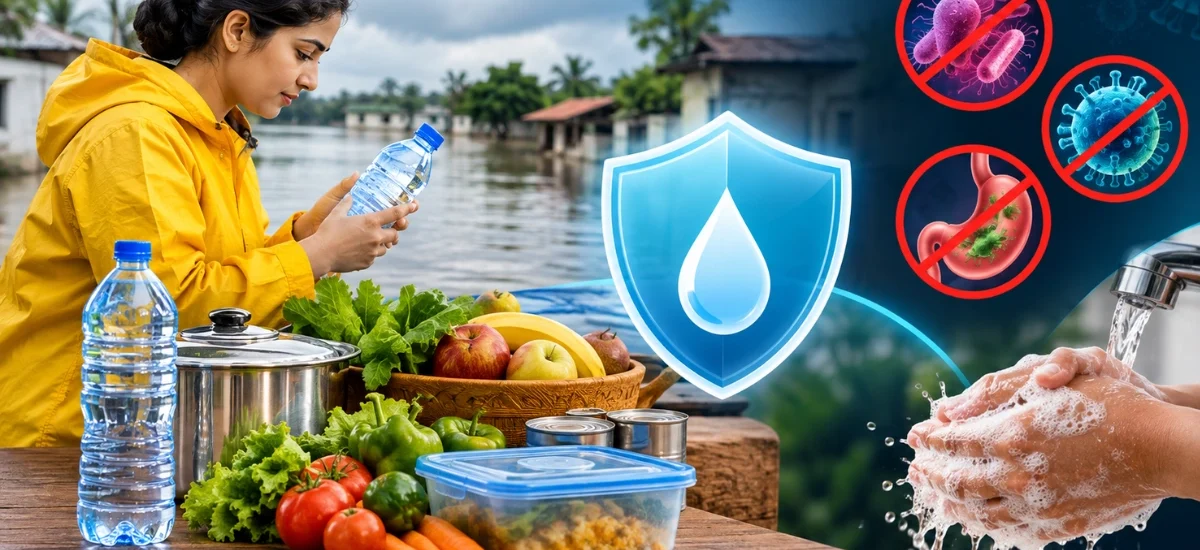
Floods and waterlogging can affect health long after the rain stops. When sewage lines overflow, drinking-water sources are damaged, or floodwater enters kitchens and food-storage areas, germs can spread through contaminated water, food, hands, utensils, and surfaces.
This can increase the risk of diarrhoea, vomiting, food poisoning, typhoid, hepatitis A, and other stomach infections. Children, older adults, pregnant women, and people with diabetes, kidney disease, liver disease, or weak immunity may become dehydrated or seriously unwell more quickly.
The most important rule is simple: if water or food may have been contaminated by floodwater, do not assume it is safe because it looks or smells normal.
What Should You Do During Floods?
To reduce the risk of food- and water-borne illness during floods:
- Drink only boiled, packaged, or officially declared safe water.
- Do not eat food that has been touched by floodwater.
- Wash hands with soap and water before preparing food, eating, feeding children, or taking medicine.
- Keep cooked and raw foods separate.
- Use clean, covered containers for drinking water.
- Avoid ice, uncovered roadside food, raw salads, and cut fruit when water safety is uncertain.
- Seek medical advice if fever, vomiting, diarrhoea, severe weakness, dark urine, or yellowing of the eyes develops.
Read This: Best Hospitals for Neurology in Patna: 10 Options to Consider
Why Floods Increase the Risk of Infection
Floodwater can mix with sewage, waste, chemicals, animal droppings, and contaminated soil. It can enter wells, hand pumps, water tanks, pipes, kitchens, food shops, and homes. Even after visible water has gone, germs may remain on utensils, floors, stored items, and hands.
Common illnesses linked with unsafe food or water include:
- Acute gastroenteritis or food poisoning
- Diarrhoea and vomiting
- Typhoid fever
- Hepatitis A
- Hepatitis E
- Cholera in areas where it occurs
- Parasitic infections
- Skin and wound infections
Not every stomach upset after rain is serious, but dehydration and persistent fever should never be ignored.
Is Tap Water Safe After Flooding?
Do not use tap, hand-pump, well, or stored water for drinking unless local authorities confirm it is safe or you have treated it appropriately.
During a flood or water-supply disruption, safe water may be needed for:
- Drinking
- Cooking
- Brushing teeth
- Making tea, coffee, or ice
- Preparing infant formula
- Washing fruits and vegetables
- Washing utensils that will touch food
- Taking medicines
If you are unsure about water safety, choose sealed packaged drinking water or properly boiled water. Follow official local instructions if they provide a water-treatment method or issue a boil-water advisory.
Store safe water in clean, covered containers. Avoid repeatedly dipping hands, glasses, ladles, or used bottles into the main container. Use a clean utensil with a handle instead.
Flood-preparedness guidance also recommends following local authorities’ instructions on water that is safe to drink, cook with, or use for cleaning. CDC flood-safety guidance
Which Foods Should Be Avoided After Flooding?
Throw away food that has come into direct contact with floodwater. Do not try to wash and reuse it.
This includes:
- Cooked food left uncovered or stored at floor level
- Fruits and vegetables that cannot be peeled or thoroughly cleaned
- Food in damaged packaging
- Open packets of flour, rice, pulses, spices, salt, sugar, or snacks
- Milk, curd, paneer, meat, fish, eggs, and leftovers kept without reliable refrigeration
- Food with an unusual smell, colour, texture, or mould
- Ice made from an uncertain water source
Avoid eating raw salads, cut fruit, chutneys, uncooked sprouts, and street food when hygiene conditions are uncertain. Choose freshly cooked, hot food served in clean utensils.
Canned food may be usable only if the container is intact, not swollen, not leaking, and can be cleaned safely. When in doubt, discard it. Replacing food is easier than treating a serious infection.
How Should Food Be Prepared Safely?
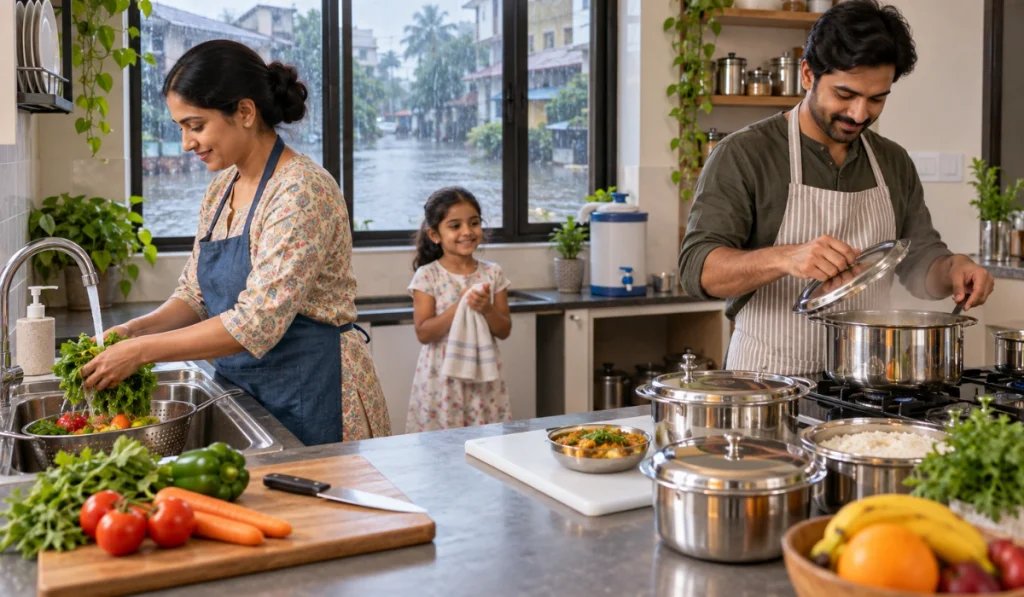
Safe food habits become especially important during floods and waterlogging.
- Clean your hands with soap and safe water before handling food or sitting down to eat.
- Use safe water to wash vegetables, utensils, and kitchen surfaces.
- Keep raw meat, eggs, and seafood away from cooked food.
- Make sure food is fully cooked, and serve it fresh while it is still warm.
- Cover cooked food to protect it from flies and dust.
- Avoid storing cooked food at room temperature for long periods.
- Reheat leftovers thoroughly only if they were stored safely.
- Use separate chopping boards or knives for raw and cooked foods where possible.
- Keep children away from food-preparation areas if their hands are dirty after playing outside.
If a refrigerator has been without power for a long time, perishable food may no longer be safe even if it appears normal.
Also Read: Dengue Symptoms: Early Warning Signs, Tests, and When to Visit a Hospital
Why Handwashing Matters So Much
Many infections spread through the faecal-oral route. In simple terms, germs from contaminated water, toilets, surfaces, or hands can enter the body through food or water.
Wash hands with soap and safe water:
- After using the toilet
- After cleaning a child
- Before cooking
- Before eating
- Before feeding a child
- Before giving medicines
- After handling floodwater, waste, pets, or dirty laundry
- After cleaning a waterlogged area
Hand sanitiser can be helpful when soap and water are temporarily unavailable, but soap-and-water handwashing is preferable when hands are visibly dirty.
Typhoid: What Is It and How Can It Be Prevented?
Typhoid is a bacterial infection caused by Salmonella Typhi. It usually spreads through contaminated food or water. It is more common in areas where people have limited access to clean drinking water, sanitation facilities, and regular hygiene practices.
Common symptoms may include:
- Persistent or prolonged fever
- Tiredness and weakness
- Headache
- Nausea
- Stomach pain
- Constipation or diarrhoea
- Reduced appetite
- Sometimes a rash
Typhoid cannot be confirmed from symptoms alone. A doctor may advise blood tests or other appropriate investigations based on the illness pattern. It should not be treated with leftover or self-prescribed antibiotics because antibiotic resistance can make treatment more difficult.
Typhoid is treatable with doctor-prescribed antibiotics, and vaccination may help prevent it in suitable age groups. The World Health Organization notes that safe water, sanitation, food hygiene, and typhoid vaccination are key prevention measures. WHO: Typhoid
Hepatitis A: Why Does It Matter After Floods?
Hepatitis A is a viral infection that affects the liver. It spreads through contaminated food or water and through close contact with an infected person. Contaminated water and poor sanitation can make infection more likely.
Symptoms may include:
- Fever and tiredness
- Loss of appetite
- Nausea or vomiting
- Stomach discomfort
- Diarrhoea
- Dark-coloured urine
- Yellowing of the eyes or skin, known as jaundice
Symptoms can be mild in some people and more noticeable in adults. Hepatitis A does not usually become a chronic liver disease, but it can still cause significant illness and requires medical assessment.
There is no routine antibiotic treatment for hepatitis A because it is caused by a virus. Care commonly focuses on hydration, nutrition, rest, monitoring, and medical guidance. A safe and effective vaccine is available; ask a qualified clinician whether it is appropriate for you or your child. WHO: Hepatitis A
Is It Typhoid, Hepatitis A, or a Stomach Infection?
Symptoms can overlap, so it is not safe to diagnose yourself based only on online information.
A stomach infection, also called gastroenteritis, may cause loose motions, vomiting, stomach cramps, and fever. Focus on safe fluids and consult a doctor if symptoms are severe, persistent, or associated with dehydration.
Typhoid may cause a prolonged fever, tiredness, headache, and abdominal symptoms such as pain, constipation, or diarrhoea. Medical evaluation and appropriate testing are important before treatment.
Hepatitis A can cause tiredness, nausea, stomach discomfort, dark-coloured urine, and yellowing of the eyes or skin. Seek medical assessment promptly if jaundice develops.
Dehydration can cause dry mouth, thirst, dizziness, reduced urination, and weakness. Start oral rehydration if tolerated, but seek urgent care if symptoms are severe or the person cannot keep fluids down.
A qualified healthcare professional can decide whether blood tests, liver-function tests, stool tests, or other investigations are needed.
You May Like: Platelet Count: What Is Normal, When Is It Low, and When Is Urgent Care Needed?
How Can You Prevent Dehydration?
Diarrhoea and vomiting can cause dehydration quickly, especially in young children and older adults.
Offer small, frequent sips of safe water or a properly prepared oral rehydration solution (ORS). Continue breastfeeding infants. Avoid very sugary drinks, alcohol, and unverified home remedies.
Watch for dehydration warning signs:
- Very little urine or dark urine
- Dry mouth and tongue
- Dizziness or fainting
- Extreme tiredness
- Sunken eyes in children
- Inability to keep fluids down
- Unusual sleepiness, confusion, or irritability
Seek urgent medical care if these signs are present, especially in an infant, child, older adult, pregnant woman, or person with chronic illness.
Should You Take Antibiotics for Diarrhoea or Fever?
Not without medical advice. Many stomach infections and diarrhoeal illnesses are viral or self-limiting. Taking an antibiotic unnecessarily may cause side effects, delay the correct diagnosis, and contribute to antibiotic resistance.
A doctor may prescribe antibiotics when there is evidence of a bacterial infection or another specific clinical reason. Take them exactly as prescribed, do not share them, and do not save leftover tablets for future illness.
When Should You Seek Urgent Medical Care?
Seek emergency help without delay if there is:
- Blood in vomit or stool
- Black, tar-like stool
- Severe or worsening abdominal pain
- Repeated vomiting or inability to drink fluids
- Fainting, confusion, seizures, or unusual drowsiness
- High fever with severe weakness
- Signs of severe dehydration
- Yellowing of the eyes or skin with vomiting, confusion, or marked weakness
- Diarrhoea or vomiting in a very young child, a frail older adult, or a person with a serious medical illness
- Suspected food poisoning affecting several people in the same household
For severe symptoms, choose the best multispecialty hospital in Patna with emergency assessment, laboratory support, hydration facilities, and specialist care when required.
A Simple Flood Food-and-Water Checklist
Before the monsoon or flood season:
- Keep clean water containers with lids at home.
- Store dry food above floor level.
- Keep ORS packets, soap, and essential medicines in an emergency kit.
- Save local emergency contacts.
- Discuss typhoid and hepatitis A vaccination with a qualified clinician if relevant.
During flooding:
- Drink only safe water.
- Eat freshly cooked, hot food.
- Avoid raw foods and uncovered street food.
- Wash hands frequently.
- Keep children away from floodwater and drains.
- Do not use floodwater for cooking or washing food.
After flooding:
- Clean and dry food-preparation areas.
- Discard food exposed to floodwater.
- Check water tanks, wells, and household storage before use.
- Continue mosquito-control measures around standing water.
- Seek medical advice if fever, jaundice, vomiting, or diarrhoea develops.
Final Thought
Food and water safety during floods is not only about avoiding an upset stomach. It is about preventing dehydration, typhoid, hepatitis A, and other potentially serious infections.
Use safe water, eat freshly prepared food, wash hands properly, avoid self-medication, and take warning symptoms seriously. When a person has persistent fever, repeated vomiting, severe diarrhoea, jaundice, or signs of dehydration, timely medical assessment is the safest next step.
This article is for general awareness and does not replace individual medical advice. Key information is based on guidance from the World Health Organization on typhoid, hepatitis A, and flood safety.